August 26, 2026 · 6-min read
How to Set Up a Memory Table That Doesn't Feel Empty
A few thoughtful objects, arranged with care, say more than a table crowded with things that don't mean anything.

Put a mix of photographs, a few personal belongings, and one or two items tied to a hobby or daily habit, then space them out with some height variation instead of lining everything flat. A memory table feels empty when there aren't enough objects, or when everything is the same size and sitting flush on the surface. The fix is usually about arrangement as much as content.
What items belong on a memorial memory table?
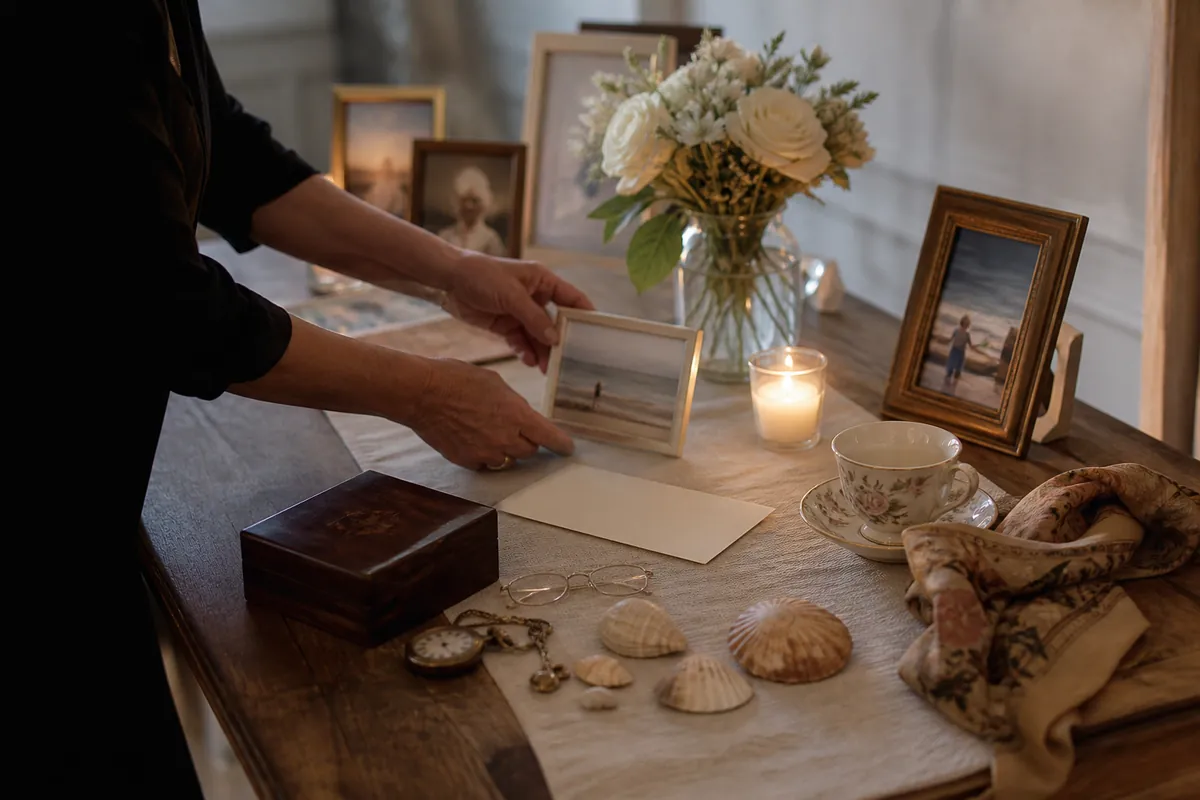
Think of the table as a small collection of "them," not a shrine of formal photos. The most personal tables mix categories:
- Photographs — a few framed, a few loose or in a small album guests can flip through
- Something they wore — a hat, a watch, a scarf, reading glasses
- Something they made or collected — pottery, woodwork, stamps, records, model cars
- A hobby item — golf clubs, knitting needles, a fishing lure, sheet music
- A well-used object — a coffee mug, a worn Bible, a recipe card in their handwriting
- Something with texture or color — flowers, a favorite blanket, a scarf draped over a corner
- A small sign or card naming who the items belonged to, in case guests are unfamiliar with the family
You don't need all of these. Four or five categories, with one or two items each, is usually enough to fill a standard table without it looking staged.
How do I arrange items so it doesn't look empty?
Emptiness on a memory table is almost always a height and spacing problem, not a quantity problem. A few adjustments make a small collection look complete:
- Build in levels. Use a stack of books, a small box, or an upside-down bowl under a tablecloth to raise some items higher than others. Flat tables look sparse no matter how much is on them.
- Group in threes. Odd numbers of objects clustered together read as intentional. Two items side by side can look accidental.
- Anchor the corners. Place something substantial, like a framed photo or a plant, at each end of the table so the middle doesn't feel like the only focus.
- Leave breathing room. A few inches of open tablecloth between groupings makes each item easier to notice, rather than crowding everything toward the center.
- Add one soft element. A folded quilt, a scarf, or a runner of fabric under the objects softens the surface and fills visual space without adding clutter.
A tablecloth in a plain, calm color also does a lot of work. It gives everything a shared background instead of competing with a bare table surface.
What if there aren't many items to use?
This is common, especially after a long illness, a move to smaller housing, or a death far from home. If the collection feels thin, a few things help without inventing anything that isn't true to the person:
- Ask family members to each bring one item. A single photo or object from several people adds up quickly and brings in more than one relationship to the person.
- Print a few extra photographs. A handful of enlarged photos, some candid and some formal, take up real space and tell more of the story than one portrait alone.
- Use a favorite quote, verse, or line from a song. A printed card in a small frame counts as an item and adds meaning without needing an object.
- Borrow, don't buy. A vase, a small easel, or a tray from around the house can hold and elevate what you do have, so the table looks complete even with fewer pieces.
It's worth saying plainly: a small table with a few real, well-chosen items will always feel more honest than a large table padded out with things that don't belong to them.
How do I make the table personal, not decorative?
The difference between a memorial display and a decorated table is specificity. Skip generic "nice" items and choose things a close friend would recognize instantly. A worn baseball cap says more than a new one bought for the display. A chipped mug from their kitchen says more than a matching set. If you're unsure whether something belongs, ask: would someone who knew them well point at this and smile.
It also helps to place the table somewhere guests naturally pause, such as near the guest book or the entrance to the service, so people have a moment with it rather than walking past.
Where should the table go at the service?
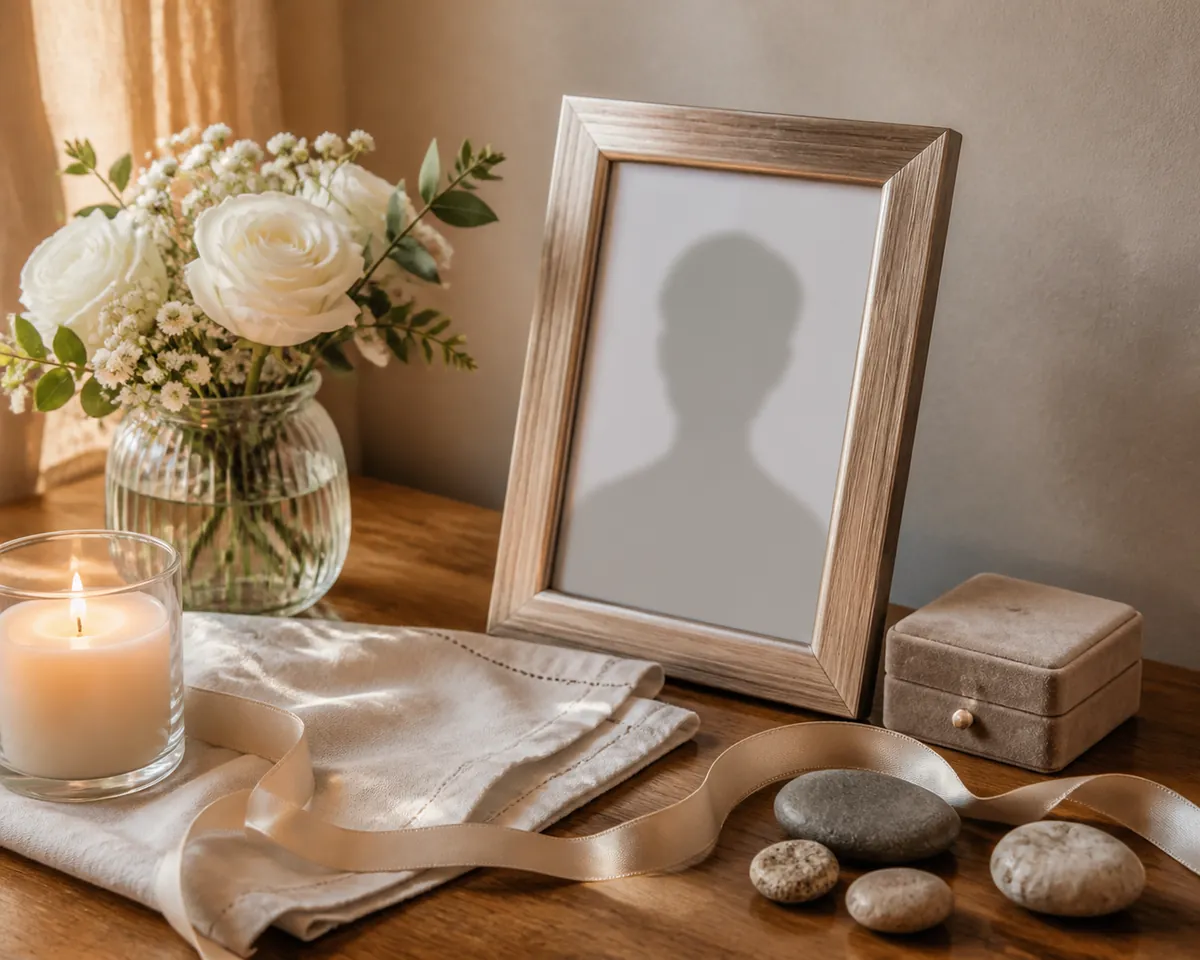
Most families place the memory table near the entrance, close to where the guest book sits, so guests see it as they arrive and have somewhere to gather before or after the service. Avoid placing it directly beside the casket or urn, since that space is usually reserved for flowers, and a crowded corner can feel chaotic rather than reflective. A quiet spot with a little walking room around it lets people actually stop and look.
If the service includes a slideshow or a longer tribute, as in a celebration of life, the memory table works well as a smaller, tangible companion to it, something guests can touch and linger over in a way a screen doesn't allow.
Once you know roughly what you have and where it's going, the last step is simply making it look finished rather than assembled in a hurry. A printed backdrop card, a small frame for a favorite photo, or a simple layout guide can help pull it together quickly when you're short on time and energy. If that would help, our Creating a Memory Table guide walks through layout and item ideas step by step, and the wider shop has other printable pieces for the service if you need them.
Frequently asked questions
- How many items should be on a memory table?
- There is no set number. A table with eight to twelve well-chosen items, arranged with some height and space between them, usually reads as full. What matters is that each item means something, not how many you have.
- Is it okay to have a small memory table with only a few things?
- Yes. A small table with two or three meaningful objects, spaced out and given room, looks intentional rather than empty. Crowding a table with filler items to make it look bigger usually has the opposite effect.
- Who is responsible for setting up the memory table?
- Usually a close family member or a friend who offers to help, since it involves gathering personal items from the home. Many funeral homes will also set the table up on the day if items are dropped off in advance.
- Can a memory table include religious or secular items together?
- Yes. Memory tables commonly mix faith items, like a Bible or rosary, with everyday objects, like a coffee mug or gardening gloves. The table reflects the person, not a single tradition, so both can sit side by side.
- memory table
- memorial display
- funeral planning
- memorial service
- celebration of life
Related reading
- How to Word a Funeral Program for a Pet Loss ServiceSimple guidance on pet memorial service program wording, with copy-ready examples for cover pages, readings, and tributes.
- How to Plan a Funeral When You Live Far AwayA practical guide to planning a funeral from out of town, with steps for coordinating remotely, delegating locally, and staying organized.
- How to Choose Funeral Flowers When You Don't Know the ProtocolNot sure what flowers to send for a funeral? Here is a simple, honest guide to type, color, size, and timing for any relationship.