
October 14, 2026 · 7-min read
How to Choose Funeral Flowers When You Don't Know the Protocol
You don't need to know the rules by heart. You just need a few honest answers before you order.
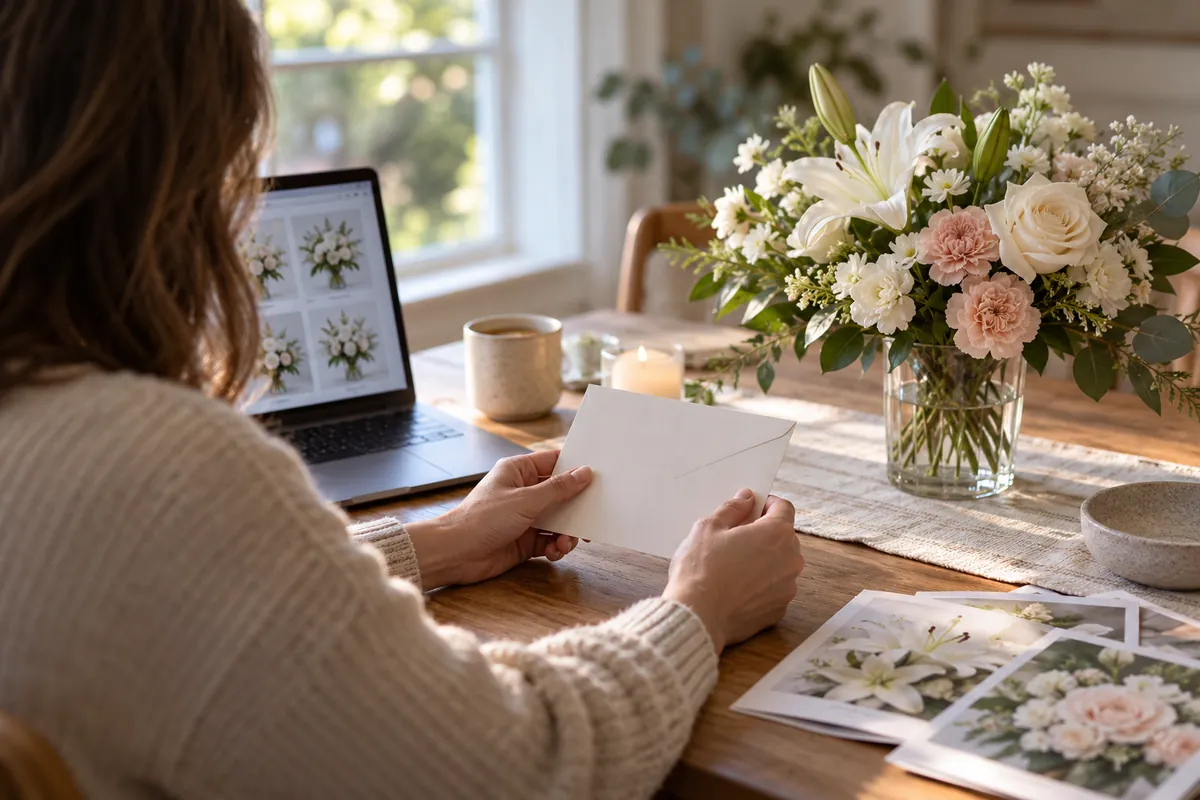
If you are wondering what flowers to send for a funeral, the short answer is: a simple arrangement in soft, muted colors, sized to match your relationship with the deceased or their family, sent to the funeral home before the service or to the family's residence afterward. You do not need to know florist terminology. You just need a few clear decisions, which this guide will walk you through.
There is no single rulebook everyone follows, and no florist will judge you for asking basic questions. What matters most is that the gesture is sincere and arrives when it is useful to the family.
What type of flowers are appropriate for a funeral?
Most florists offer three general categories for sympathy flowers, and any of them is acceptable:
- Standing sprays — tall arrangements on an easel, typically sent by close family, a spouse's workplace, or a large group of coworkers or friends chipping in together.
- Casket sprays — arranged to lie across the casket, almost always ordered by immediate family only. Do not order one of these unless you are the spouse, parent, child, or sibling, or the family has asked you to.
- Vase arrangements or bouquets — a smaller, self-contained arrangement that works well for extended family, friends, neighbors, or coworkers. This is the safest, most common choice if you are unsure.
- Potted plants — a living plant (orchid, peace lily) that the family can keep or plant afterward. Good for anyone, and especially thoughtful if you want to avoid cut flowers that will fade within a week.
If you are not immediate family, a vase arrangement or potted plant is almost always the right call. It is warm without overstepping.
What colors should I choose for sympathy flowers?
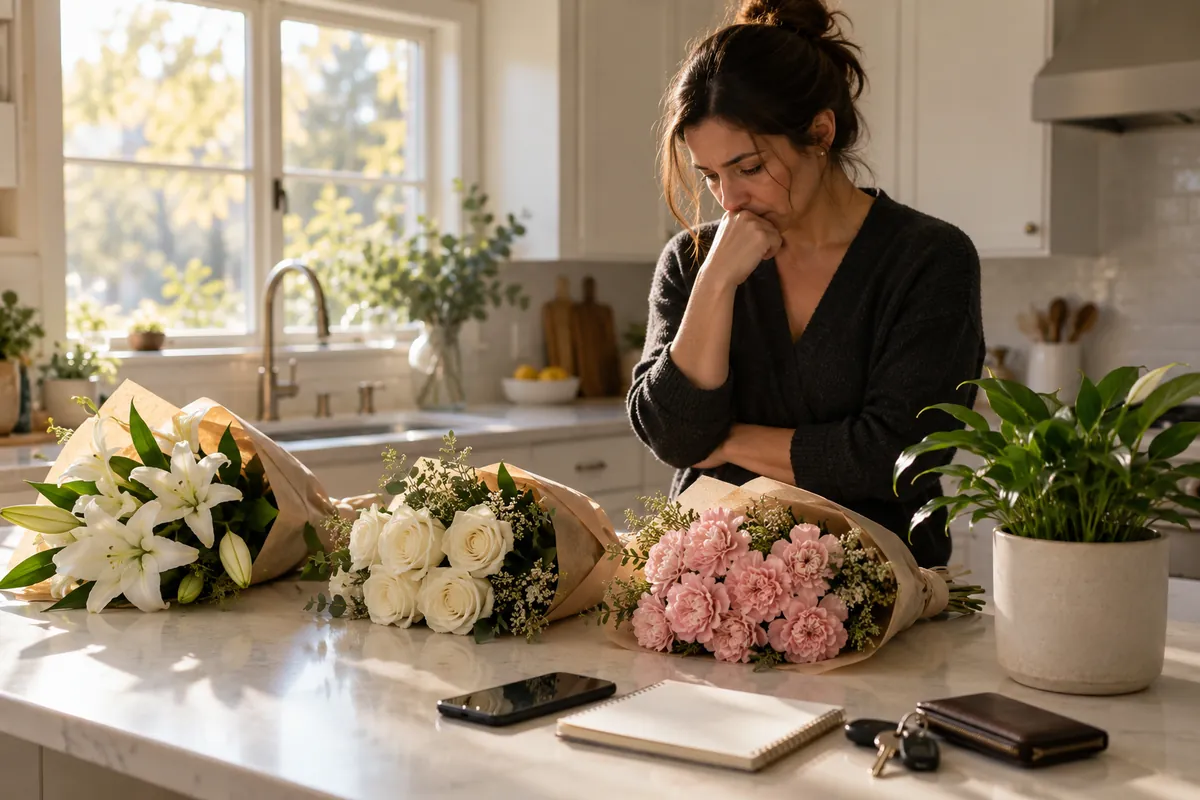
Softer, muted tones are the traditional default: white, cream, pale pink, soft lavender, and sage green. White lilies, roses, and carnations are the most common sympathy flowers for a reason. They read as calm and respectful without saying anything specific about your relationship.
That said, color rules have loosened over the years. Consider brighter or more personal colors if:
- The deceased had a favorite color or flower you know for certain.
- The family has specifically requested "bright, celebratory" flowers instead of traditional sympathy colors.
- The service is being described as a celebration of life rather than a traditional funeral.
If you have no information to go on, stay with the soft, muted palette. It is never wrong, even at a celebration of life.
How big should the arrangement be?
Size should roughly match your relationship and your role in the family's life, not your budget alone.
- Immediate family (spouse, parent, child): standing spray or large arrangement, often coordinated with a sibling or funeral director.
- Extended family, close friends: medium vase arrangement, sent to the funeral home or the family's home.
- Coworkers, acquaintances, neighbors: a smaller bouquet or a group arrangement where several people split the cost.
- Casual acquaintance or someone you knew mainly through the deceased: a modest bouquet, a potted plant, or simply a card.
There is no need to compete with other arrangements in size or cost. A modest bouquet sent with care means exactly as much as a large one.
Where and when do the flowers need to arrive?
This is the part people worry about most, and it is simpler than it feels.
- Check the obituary or funeral announcement first. It often states whether the family prefers flowers, donations, or both, and sometimes lists the funeral home's address directly.
- Send to the funeral home if the service hasn't happened yet. Call ahead and give the funeral home the deceased's full name and the service date, since they handle dozens of arrangements at once.
- Send to the family's home if the service has already passed, or if you only just heard the news. This is completely acceptable and often appreciated even more, since it arrives after the chaos of the service has settled.
- Order a few days ahead when you can. Local florists near the funeral home can usually deliver same-day, but ordering 24 to 48 hours ahead avoids any last-minute scramble.
If you are too late for the viewing or service, do not skip the gesture entirely. A card or a small arrangement sent to the home the following week is still a kindness, and often lands at a moment when the family needs it more, once the initial flood of visitors has moved on. For guidance on writing that card well, a memorial guest book or sympathy note can carry the same warmth as flowers if you choose words with care.
What should I write on the card?
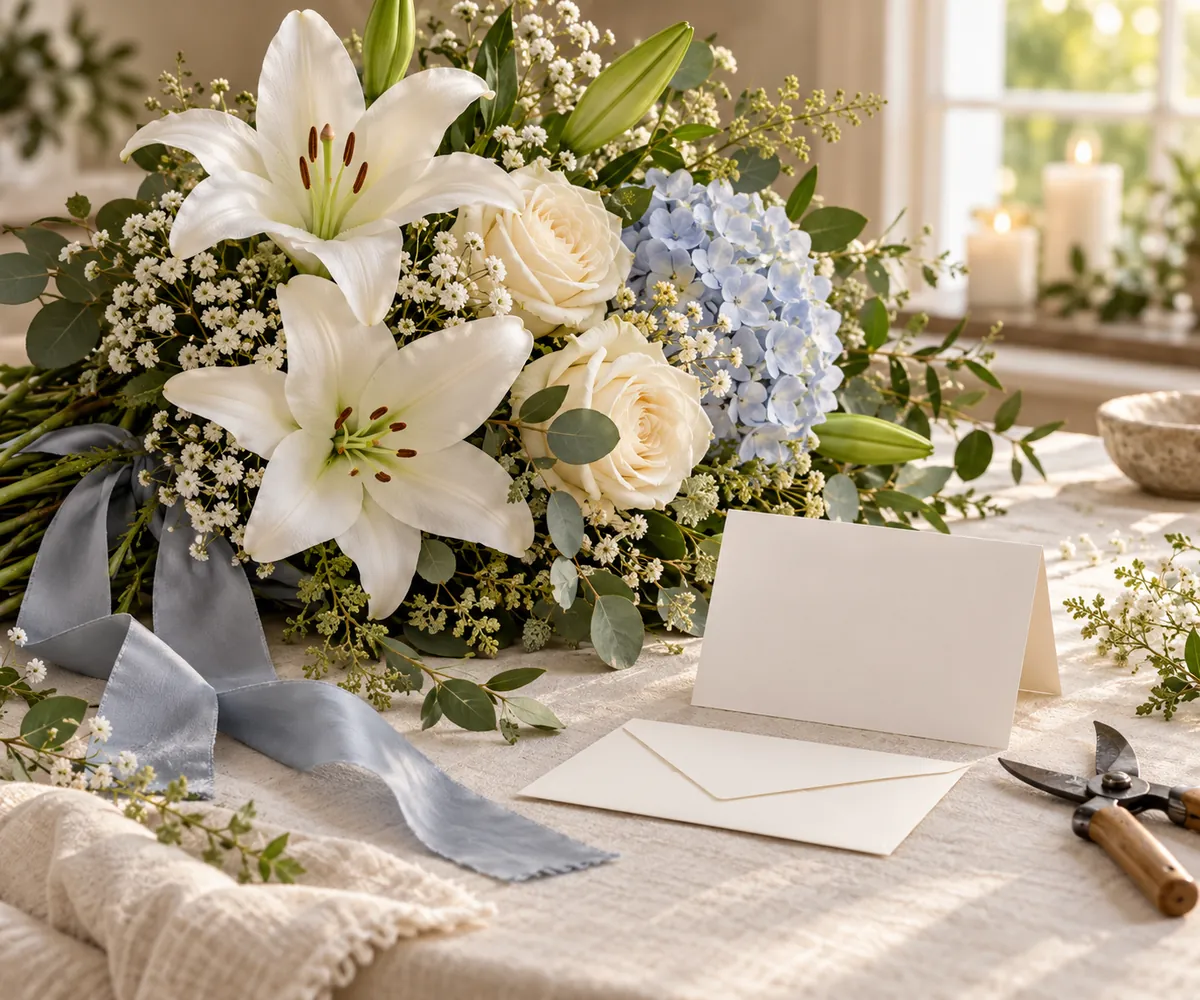
Keep it short. A card does not need to be eloquent to be meaningful. A few honest lines are enough:
- "Thinking of you and your family during this difficult time."
- "[Name] will be deeply missed. Sending love and comfort to all of you."
- "With deepest sympathy, from the [Smith] family."
- "I am so grateful to have known [Name]. Wishing you peace."
Sign with your full name, especially if the family may not immediately recognize your handwriting or if you are sending on behalf of a group. If the flowers are from a workplace or organization, note that too, so the family understands the connection.
What if the family asked for no flowers?
Some obituaries request donations to a charity instead of flowers. If that is the case, respect it directly rather than finding a workaround. You can read more on how to word a memorial donation request if you are the one organizing that request for your own family.
If you still want to do something personal in addition to a donation, a small arrangement sent to the family's home a week or two after the service is a gentle, separate gesture that does not conflict with their wishes for the service itself.
A small note on the card itself
Flowers fade within a week or two, but a card is something a family can keep. If you would rather send something that lasts a little longer than a bouquet, a sympathy card set with five different cards gives you options for the service, the weeks after, and the anniversary that follows, so you are not scrambling to find the right words more than once. It is a small thing, but it tends to matter more over time than people expect.
Whatever you choose, the gesture itself is what the family will remember, not whether you followed every rule. If you are also figuring out other parts of attending or planning a service, our guide to what to wear to a funeral and the full shop of printable keepsakes may help with the rest.
Frequently asked questions
- Is it ever wrong to send flowers to a funeral?
- Flowers are almost always appropriate unless the family has specifically asked for something else, such as donations, in the obituary or announcement. When in doubt, read the obituary first, since it usually tells you directly.
- How much should I spend on funeral flowers?
- There is no required amount. A simple, well-chosen arrangement in the twenty-five to sixty dollar range is appropriate for most relationships, with larger standing sprays reserved for immediate family or close coworkers pooling money together.
- What if I can't get flowers there in time for the service?
- Send them to the family's home instead, before or after the service, or send a potted plant that can arrive on your own timeline. A card alone, sent promptly, is also completely acceptable.
- Should I send flowers if the family requested donations instead?
- Honor that request. You can still send a small arrangement to the home a few days later as a personal gesture, separate from the service, if you want to do something in addition.
- Do flower colors actually matter at a funeral?
- They matter less than people fear. Soft, muted tones are the safest default, but there is no firm rule against brighter colors, especially if they reflect something the person loved.
- funeral etiquette
- funeral flowers
- sympathy gifts
- condolences
- funeral planning
Related reading
- How to Word a Funeral Program for a Pet Loss ServiceSimple guidance on pet memorial service program wording, with copy-ready examples for cover pages, readings, and tributes.
- How to Plan a Funeral When You Live Far AwayA practical guide to planning a funeral from out of town, with steps for coordinating remotely, delegating locally, and staying organized.
- How Many Songs Do You Need for a Funeral?Learn how many songs do you need for a funeral, when to play them, and how to fit music around readings, tributes, and quiet reflection.