
October 16, 2026 · 7-min read
How to Plan a Funeral When You Live Far Away
You can't be there in person yet, but you can still get this right. Here's how to plan from wherever you are.
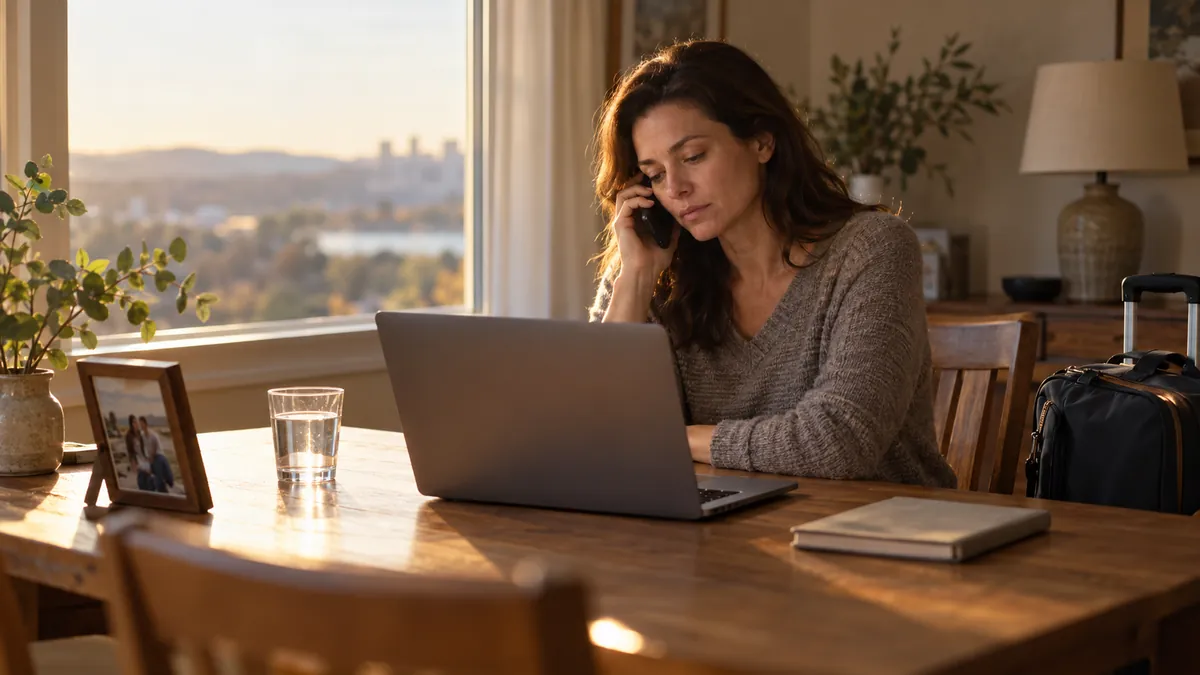
Planning a funeral from out of town is entirely possible. You coordinate by phone and email with a local funeral home, lean on one trusted person on the ground, and handle most decisions, paperwork, and payments remotely before you travel.
That doesn't make it easy. You're grieving, dealing with flights or driving hours, and trying to make decisions about a place and a community you're not standing in. Here's how to do it without falling apart or missing something important.
What should I do first after hearing the news?
Before you book a flight or start making calls, take a breath and get the basic facts straight. A few minutes of clarity now saves hours of confusion later.
- Confirm where the death occurred (hospital, home, hospice, care facility).
- Find out if a funeral home has already been contacted.
- Ask who currently has legal authority to make decisions (usually next of kin).
- Write down the names and phone numbers of everyone involved so far.
If no funeral home has been chosen yet, you can select one from where you are. Most funeral homes take calls day and night and are used to working with out-of-town families. You do not need to be physically present to start the process.
How do I choose a funeral home without visiting it?
You can vet a funeral home remotely with a phone call and a few direct questions. Ask:
- Can we handle the entire contract and payment by phone, email, or online portal?
- What do you need from me before I arrive, and what can wait?
- Do you have experience coordinating with out-of-town family members?
- Can you send itemized pricing by email so I can review it with others?
A funeral home that hesitates to answer these clearly, or pushes you toward decisions before you've had time to think, is worth questioning further. A good one will slow down for you, not speed you up.
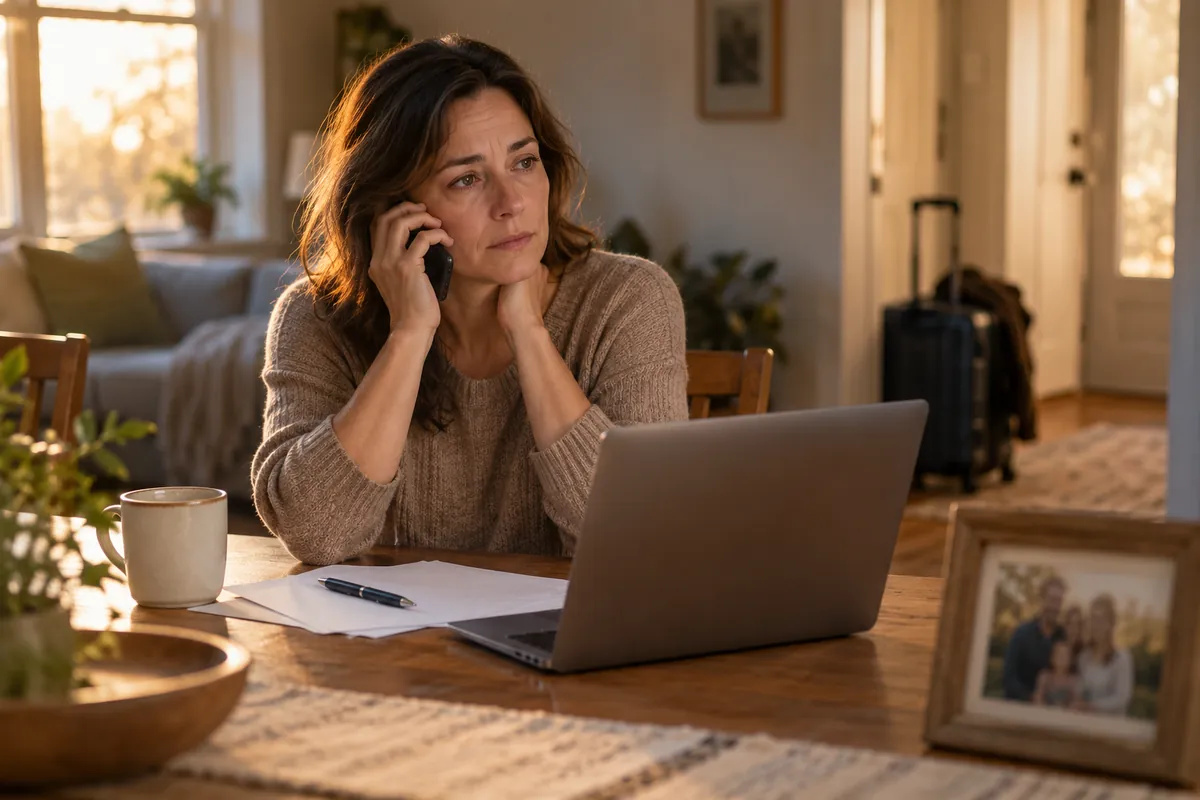
Who should be my person on the ground?
You need one local point of contact, even if it's not you. This might be a sibling, a close friend of the deceased, a neighbor, or a clergy member. Their job isn't to make decisions alone. It's to be physically present when something needs a signature, a key, or a face-to-face answer.
Give this person a short, specific list so they're not guessing:
- Pick up or verify any paperwork the funeral home needs in person.
- Check the house or facility for important documents (will, insurance policy, burial plot deed).
- Water plants, collect mail, or feed pets if needed.
- Be your eyes and ears for anything that's hard to judge over the phone, like the condition of a venue.
Be honest with them about what you need. People close to a loss often want to help but don't know how until you tell them exactly what would make a difference.
What can I realistically handle remotely?
More than you'd think. Most of funeral planning is decisions and paperwork, not physical presence.
You can usually do these from anywhere:
- Choose the funeral home and sign contracts electronically or by mail.
- Approve costs and payment arrangements.
- Write or edit the obituary (our guide on how to write an obituary walks through structure and wording).
- Select readings, music, and the order of service.
- Approve a photo for the program or memorial card.
- Order flowers remotely through a local florist.
- Notify extended family and friends by phone, email, or group text.
These usually need someone physically present:
- Identifying the body, if required.
- Picking up personal belongings from a hospital or care facility.
- Signing original paper documents that can't be notarized remotely.
- Choosing a casket or urn in person, if you want to see it first.
Knowing which tasks fall into which category early on lets you delegate with confidence instead of guessing what has to wait for your arrival.
How do I keep everyone informed without endless calls?
Repeating the same update to six different relatives is exhausting and easy to get wrong. Set up one simple system early:
- Start a group text or email thread with immediate family for updates.
- Designate one person to answer general questions from extended family and friends, so you're not fielding the same question ten times.
- Share the service date, time, and location in one message everyone can forward.
- If distance means some relatives can't attend, ask the funeral home about streaming or recording the service.
This isn't about efficiency for its own sake. It's about protecting your energy for the decisions that actually need you.

What should I pack or prepare before I travel?
Once a date is set, you'll likely need to travel for the service itself. A little preparation beforehand means you're not scrambling once you land.
- Printed or digital copies of any signed contracts or paperwork.
- A list of contacts at the funeral home, with direct phone numbers.
- Appropriate clothing (see our guide on what to wear to a funeral if you're unsure what counts as respectful).
- Any photos, readings, or written tributes you've prepared remotely.
- A phone charger and a way to stay reachable the whole trip.
If budget is a concern on top of travel costs, our piece on planning a funeral on a tight budget covers what to prioritize and what's safe to skip.
What if I can't get there in time for the service?
This happens more often than people admit, and it carries its own grief. Talk to the funeral home about options like a livestream, a recorded service, or a separate memorial gathering later when you can be present in person. Many families now hold a small service immediately and a larger celebration of life once everyone can gather.
None of this means you loved them less because you weren't in the room. Distance is a logistical fact, not a measure of devotion.
A gentler way to stay organized
Even with a local contact and a cooperative funeral home, there's a lot to track: dates, decisions, who's doing what. Some families find it easier to work from a single document that holds everything in one place, rather than scattered texts and sticky notes. Our Funeral Planning Guide is built for exactly that, and it's also handed off easily if someone else needs to pick up a task while you're still in transit. You can browse other printable resources in the shop if you need programs or cards once the details are settled.
You don't have to do this perfectly. You just have to do it one phone call, one decision, at a time.
Frequently asked questions
- Can I plan a funeral entirely over the phone and online?
- Yes. Most funeral homes now handle contracts, payment, and even obituary approval by phone, email, or video call. You may need to sign one or two documents in person or by mail, but the bulk of planning can be done remotely.
- Who has the legal right to make funeral decisions if family is scattered?
- Usually the next of kin, in an order set by state law (spouse, then adult children, then parents, then siblings). If several people qualify, the funeral home will ask you to agree on one point of contact to avoid delays.
- How soon do I need to arrive in town after a death?
- There is rarely a strict deadline. Funeral homes can usually hold arrangements for several days while you travel, though burial timing may vary by state and by whether a service is religious.
- What if two family members disagree on arrangements and one of us isn't local?
- Ask the funeral home to put major decisions in writing and share them with everyone involved by email, so distance does not become an excuse for being left out of the conversation.
- funeral planning
- long distance
- grief
- funeral checklist
- out of town
Related reading
- How to Word a Funeral Program for a Pet Loss ServiceSimple guidance on pet memorial service program wording, with copy-ready examples for cover pages, readings, and tributes.
- How to Choose Funeral Flowers When You Don't Know the ProtocolNot sure what flowers to send for a funeral? Here is a simple, honest guide to type, color, size, and timing for any relationship.
- How Many Songs Do You Need for a Funeral?Learn how many songs do you need for a funeral, when to play them, and how to fit music around readings, tributes, and quiet reflection.