
September 23, 2026 · 6-min read
What to Bring to a Funeral: A Respectful Guide
A quiet gesture of care can mean more than finding exactly the right words.
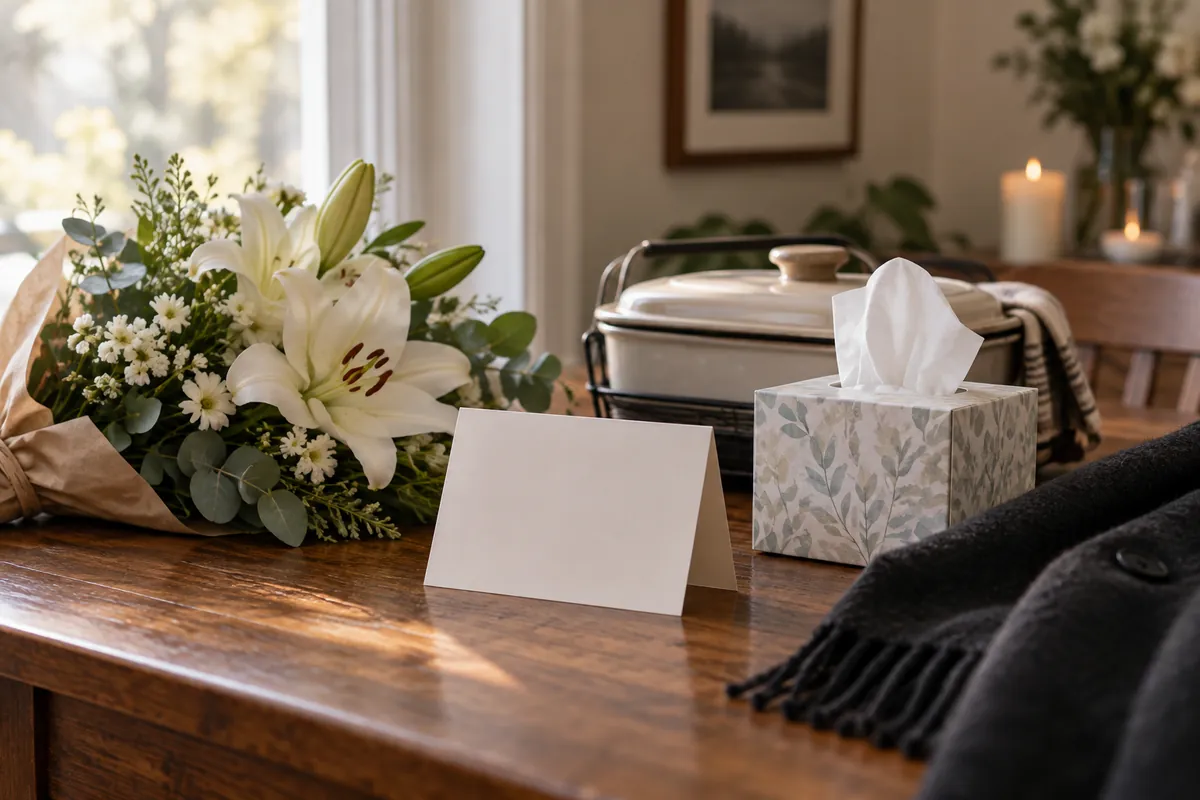
When deciding what to bring to a funeral, remember that you do not need to arrive with a large gift or the right words. Your respectful presence, a simple sympathy card, or one practical offer of support is enough.
Funerals can make people worry about doing the wrong thing. In truth, grieving families rarely remember whether someone brought the expected item. They remember kindness, patience, and the people who showed up.
Do you need to bring something to a funeral?
No. It is completely acceptable to attend a funeral with nothing in your hands.
If you knew the person or family well, you may want to bring a card, flowers, food, or a donation. If you were a coworker, neighbor, acquaintance, or attending to support someone else, a quiet greeting and your presence are meaningful on their own.
The most important thing is to follow any wishes shared in the obituary, funeral announcement, or invitation. Families may ask for:
- Donations to a named charity instead of flowers
- A contribution to a memorial fund
- Food for a gathering after the service
- A photograph or written memory for a memory table
- No gifts or flowers
When no guidance is given, choose a small gesture that feels genuine rather than elaborate.
What is appropriate to bring to a funeral?
A sympathy card is one of the most appropriate things to bring. It is private, easy for the family to receive, and can be read when they have a quiet moment later.
Other thoughtful options include:
- Flowers, if the family has not requested donations in lieu of flowers
- A donation to the family’s chosen charity or memorial fund
- A handwritten note sharing a favorite memory
- A meal, only if you know the family well or have arranged it with someone close to them
- A framed photo or meaningful keepsake, if you are certain it would be welcome
- A practical offer, such as driving a family member, bringing groceries, or caring for pets
If you are bringing an item, keep it modest and easy to manage. The family may be moving between a funeral home, church, cemetery, and reception. They may not have room to carry or store large gifts that day.
Should you bring flowers or a donation?
Either can be appropriate, but the family’s stated wishes should guide you.
If an obituary says “in lieu of flowers,” it usually means the family would prefer donations to a particular organization or cause. This may have been meaningful to the person who died, or it may support a need close to the family’s heart. Respecting that request is a kind gesture.
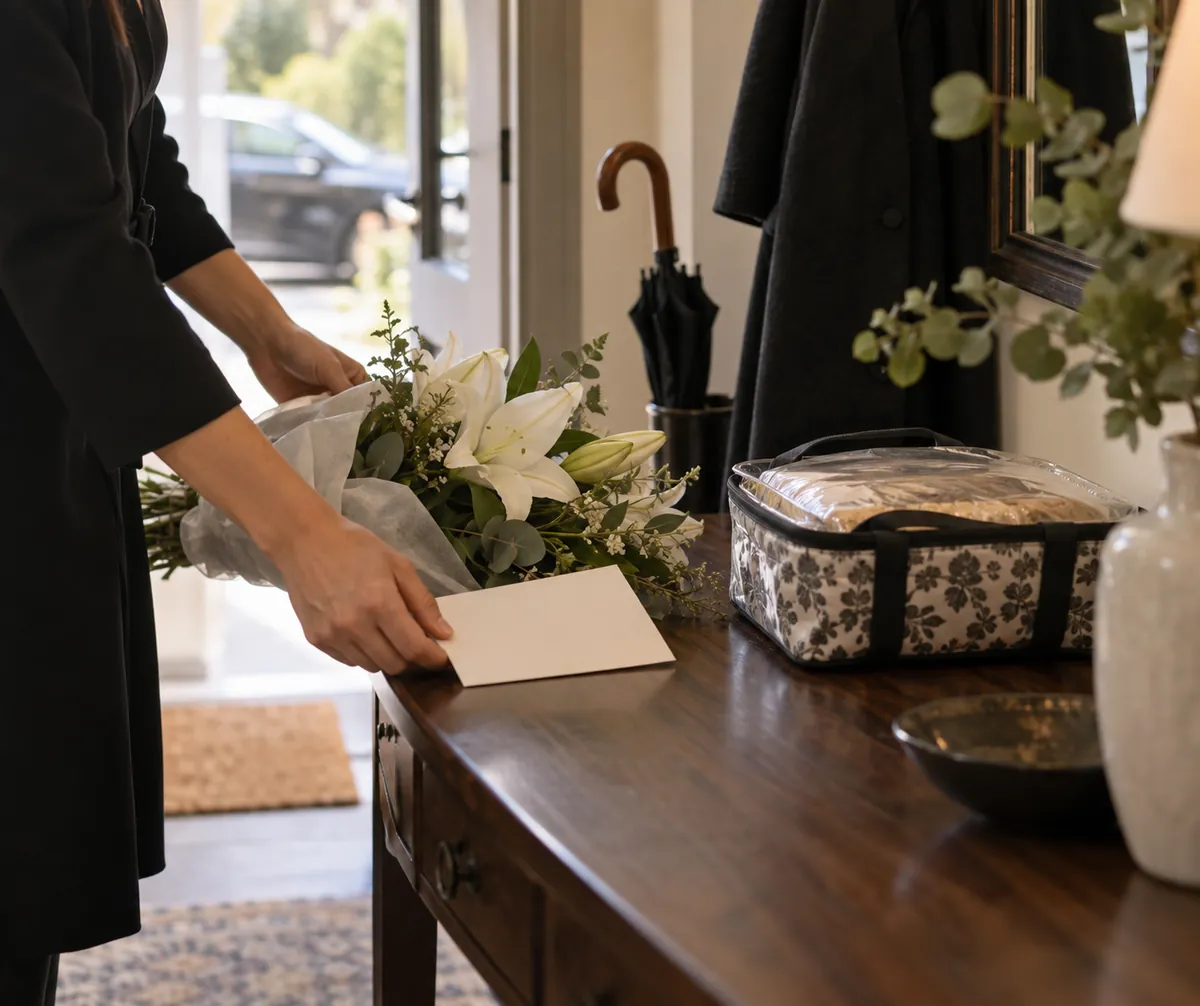
If there is no mention of donations, flowers are still a traditional way to express sympathy. You can send them to the funeral home before the service or bring a small arrangement to the family’s home afterward. If you attend with flowers, follow the staff’s direction about where to place them.
A donation does not need to be large. What matters is that it reflects the family’s request and is given with care.
What should you write in a sympathy card?
You do not need to write a long message. A few honest words are enough, especially when someone is grieving deeply.
You might write:
- “I am so sorry for your loss. I am thinking of you and your family.”
- “I will always remember their kindness and sense of humor.”
- “I am holding you close in my thoughts during this difficult time.”
- “There are no words for this loss. I am here for you.”
- “Your loved one made a real difference in my life. I am grateful to have known them.”
- “I would be glad to bring dinner next week or help with errands.”
If you did not know the person well, it is fine to focus on the family member you do know. For example: “I am so sorry you are going through this. I am thinking of you and sending care.”
Avoid telling someone that everything happens for a reason or that they should be grateful for a long life. Even when well meant, these phrases can feel painful in the first days of loss.
Can you bring food to the family?
Food can be helpful, but timing and coordination matter.
The day of the funeral may be too busy for the family to manage dishes, leftovers, or dietary needs. If there is a reception or meal afterward, ask the organizer whether food is needed before bringing anything. A disposable container or a gift card for a local meal can make things easier.
Often, the most useful time to bring food is a few days after the funeral, when visitors have gone home and daily responsibilities begin again. A short message can help:
“I would like to leave a meal at your door on Tuesday. Would that be helpful, and are there any food allergies I should know about?”
Giving the family an easy way to say no is part of being considerate.
What should you bring if you are a coworker?
For a coworker’s funeral, a card signed by colleagues is often the simplest choice. Your workplace may also organize flowers, a meal delivery, or a charitable donation together.
If you are attending alone, bring a personal card only if it feels right. Keep your message warm and professional. You could mention a quality you appreciated, a project you shared, or the impact they had at work.
If you are not attending, sending a card to the family or contributing to a group gesture is still thoughtful. You do not need to explain why you could not be there.
Is it okay to bring a child to a funeral?
Children can attend funerals when the family welcomes them and when they are prepared for what will happen. You do not need to bring anything special for them to give the family.
Before the service, explain in simple language that people may cry, sit quietly, pray, share memories, or say goodbye. Bring a quiet activity, snack, and water if the child is young. Sit near an exit so you can step out if they become overwhelmed.
If you are uncertain whether children should attend, ask a close family member or the funeral director. Every family’s comfort level is different.
How can you offer help without adding pressure?
Specific offers are easier to accept than broad ones. “Let me know if you need anything” is kind, but a grieving person may not know what to ask for.
Instead, offer one clear task:
- “I can pick up groceries on Thursday.”
- “Would it help if I drove Aunt Maria to the service?”
- “I can take your dog for a walk this week.”
- “I am available to make phone calls or help write thank-you notes.”
- “I can bring coffee and breakfast by Saturday morning.”
If the family says no, accept it gracefully. You can check in again later, when the first rush of support has quieted.
For more guidance on communicating with someone after a loss, read How to Answer “How Are You Doing?” After a Death in the Family.
What matters most at a funeral?
What you bring matters less than how you show care. Arrive on time, silence your phone, dress respectfully, and follow the family’s lead. Sign the guest book if there is one, offer a brief condolence, and allow close relatives space when they need it.
If you feel unsure, choose the simplest path: attend, listen, and offer one sincere sentence. A card can also give the family something gentle to return to after the service. If it would help to have a few thoughtful options ready, this set of five different sympathy cards offers quiet space for a personal message.
Frequently asked questions
- Should I bring flowers to a funeral?
- Flowers are usually welcome unless the obituary or family has requested donations instead. If you are unsure, a sympathy card is a simple and appropriate choice.
- Is it appropriate to bring money to a funeral?
- It can be appropriate if the family has named a memorial fund, charity, or donation request. Otherwise, a card with a check or cash may feel too personal, so consider offering practical help directly.
- What should I write in a funeral sympathy card?
- Keep it simple and sincere. You might say that you are thinking of the family, share one kind memory, or offer a specific form of help.
- Do I need to bring anything if I did not know the person well?
- No. Your presence and a quiet expression of sympathy are enough. A brief card is thoughtful if you would like to leave something for the family.
- funeral etiquette
- sympathy
- grief support
- funeral planning
- memorial service
Related reading
- How Many Funeral Programs Should You Print?Wondering how many funeral programs should I print? Use your expected attendance, then add a small cushion for family and unexpected guests.
- How to Word a Memorial Donation Request Instead of FlowersLearn how to word an in lieu of flowers donation request for an obituary or program, with copy-paste wording for a chosen charity or donor's choice.
- What to Do When You're Named Executor and Also GrievingPractical guidance for handling the duties of executor of estate while grieving, with steps, timelines, and what can wait.