
September 25, 2026 · 6-min read
Funeral Reception Ideas: Food, Setup, and What to Expect
A simple gathering can give people room to share a meal, a memory, and a quiet moment together.
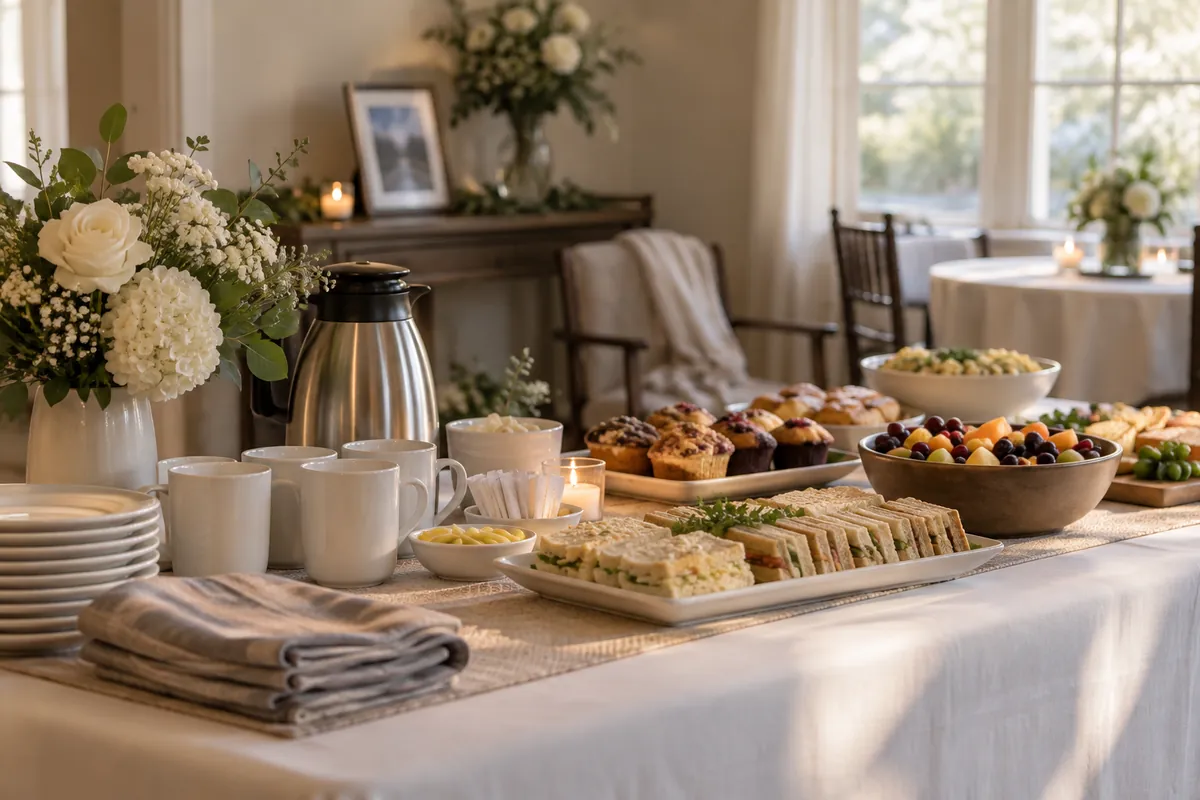
Funeral reception ideas do not need to be elaborate. The most meaningful gathering is usually one with enough food, a comfortable place to sit or stand, and room for people to share memories after the service.
A funeral reception, sometimes called a repast, luncheon, or memorial gathering, gives people a gentle transition after the formal part of the day. It can be held at a home, a church hall, restaurant, community room, or funeral home. There is no single right way to host one.
What happens at a funeral reception?
Most funeral receptions are informal. Guests arrive after the service, offer condolences, eat something small, and spend time with family and one another.
You do not need to plan a full program. In many cases, the gathering flows naturally. People may look at photographs, tell stories, introduce themselves to relatives, or simply sit quietly together.
A simple reception might include:
- Coffee, water, tea, and a few soft drinks
- A light meal or easy buffet
- Tables and chairs for older guests
- A small display of photos or meaningful items
- A guest book or cards for written memories
- Background music, if it feels comforting
- A person who can help greet guests and answer practical questions
If someone wants to say a few words or offer a prayer, that can be welcomed. It does not need to be scheduled unless your family prefers structure.
Where should you hold the gathering?
Choose a place that feels manageable, not impressive. Consider how far people will need to travel after the funeral and whether the space can comfortably hold those invited.
Common options include:
- A family home for a smaller, more personal gathering
- A church or place of worship with a fellowship hall
- A funeral home reception room
- A restaurant with a private room
- A community center, clubhouse, or park pavilion
- A favorite local restaurant or gathering place connected to the person who died
Before deciding, ask a few practical questions:
- Is the space available at the time you need it?
- Are tables, chairs, dishes, and linens included?
- Is there a kitchen or area for catered food?
- Is the location accessible for guests with mobility needs?
- Is there enough parking?
- Who will clean up afterward?
A restaurant or catered venue can reduce work for the family. A home gathering can feel more intimate but may require more help. Neither choice says more about your love.
What food should you serve?
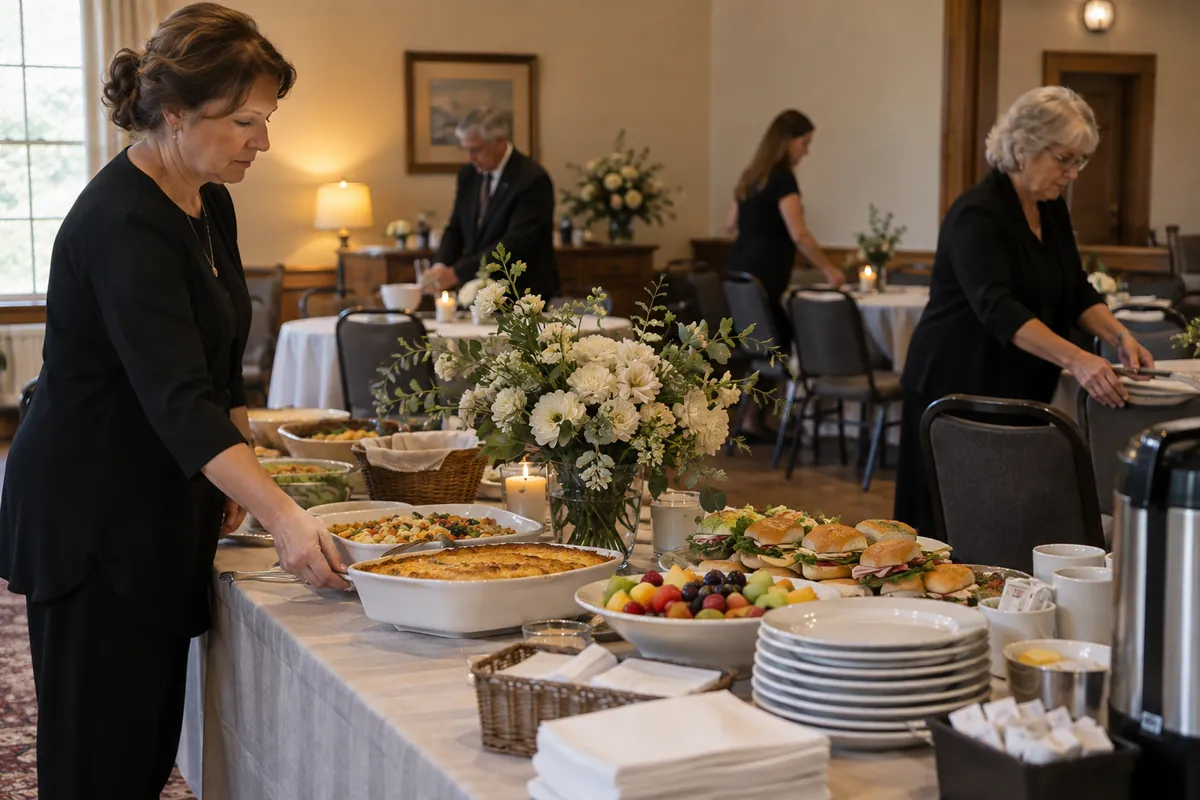
Funeral reception food should be easy to eat, easy to serve, and suited to the time of day. Guests are not expecting a formal dinner. They will remember being cared for, not whether every dish matched.
For a morning or afternoon reception, consider:
- Sandwich trays or wraps
- Quiche, muffins, or pastries
- Fruit, cheese, and crackers
- Soup with bread or rolls
- Vegetable trays and dip
- Cookies, brownies, or simple cakes
- Coffee, tea, water, and lemonade
For a meal held around lunch or dinner, you might choose:
- A buffet from a local restaurant
- Pasta, salad, and bread
- Barbecue with simple sides
- Baked dishes brought by family and friends
- Chili or soup with toppings
- Fried chicken, sandwiches, or tacos
If the person who died had a favorite food, including it can be a quiet and personal touch. Perhaps it is a familiar pie, a particular soup, or the coffee they always served visitors. Keep it simple enough that it brings comfort rather than another decision.
How much food do you need?
You do not have to predict every guest exactly. Ask the funeral home, church, or venue for a rough attendance estimate, then plan according to whether the reception replaces a meal or offers light refreshments.
If you expect guests immediately after a midday service, offer enough for a light lunch. If the gathering is later in the afternoon, snacks and drinks may be enough. It is usually helpful to have a little extra water, coffee, and simple food that can be replenished easily.
How do you set up the room?
Set up the space so guests can move around without needing to ask where to go. Put food and drinks in one clear area, with cups, napkins, plates, and utensils at the beginning of the table.
A calm, practical layout often includes:
- A welcome table near the entrance
- A guest book and pens in an easy-to-see place
- A photo display away from the food line
- A buffet table with room for people to pass
- Small tables for conversation
- Seating reserved for immediate family, if needed
- A quiet corner for anyone who needs privacy
If you are using photos, choose a manageable number. A few framed photographs, a memory board, or a looping slideshow can be enough. Too many items can create more work when you are already carrying a great deal.
What should you tell guests?
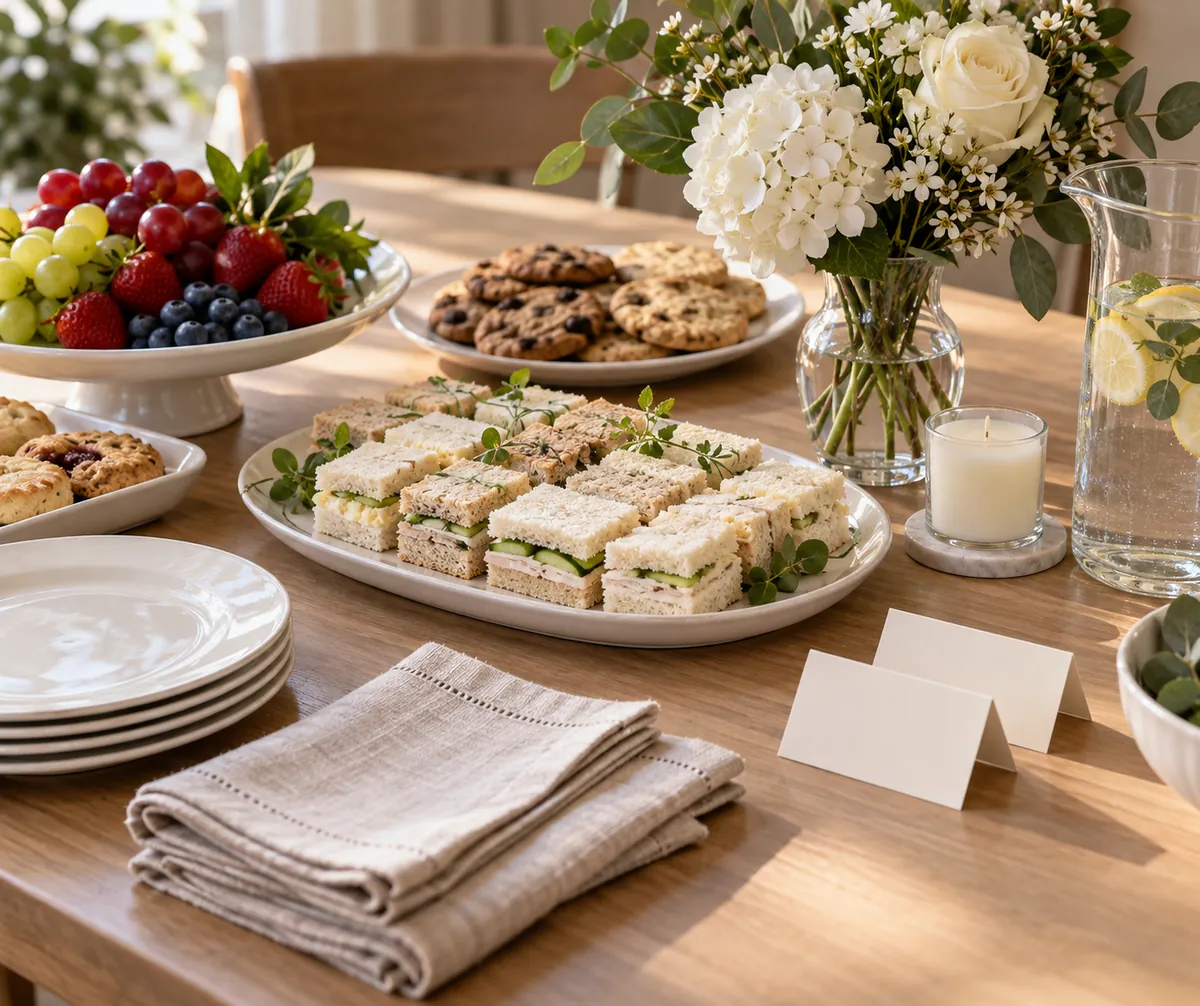
Let guests know the basic details: where the reception is, whether it follows the service, and whether everyone is welcome. You can add this to the obituary, funeral announcement, or service program.
Here are a few wording examples you can use:
- “Please join the family for a reception following the service at [location].”
- “Friends and family are invited to gather for light refreshments and fellowship after the funeral.”
- “A private family reception will be held following the service.”
- “All are welcome to join us for a meal and time of remembrance at [location].”
If you are preparing a printed program, a short reception note can be included near the closing details. Our gentle funeral program checklist can help you decide what else may be useful to include.
Who can help host the reception?
The closest family members should not have to manage every detail. If someone asks how they can help, give them a specific task.
You might ask trusted people to:
- Pick up food or receive a delivery
- Set out drinks and replenish supplies
- Arrange flowers or photo displays
- Welcome guests at the door
- Watch the guest book table
- Pack leftovers at the end
- Help clean up and return borrowed items
Choose one point person who can answer venue questions. This allows the immediate family to step away, eat, talk with loved ones, or leave early if they need to.
Do you need activities or speeches?
No. Conversation is often enough. A reception is not a second ceremony unless you want it to be.
If your family would appreciate a little structure, keep it optional and brief. You could place memory cards on tables, invite guests to add a photo to a board, or set out a basket for written notes. A short toast, prayer, or shared favorite song may also feel right.
For a gathering that is less traditional and more centered on personal stories, these celebration of life ideas may offer gentle direction.
How can you keep it simple?
When grief is fresh, simpler is often kinder. Choose the option that creates the fewest decisions and asks the least of the people closest to the loss.
A helpful final checklist is:
- Confirm the location and start time
- Decide whether the food is a meal or light refreshments
- Ask two or three people to handle practical tasks
- Set out a guest book or memory cards
- Make sure water, coffee, plates, and napkins are available
- Give yourself permission to leave when you need to
If you would like one place to hold these details, a Funeral Planning Guide can help you keep the reception, service, and small practical decisions organized during a difficult time.
Frequently asked questions
- Who usually pays for a funeral reception?
- The immediate family often pays, but relatives or close friends may offer to bring food, host, or contribute toward costs. It is also fine to keep the gathering simple or ask guests to bring a dish.
- How long should a funeral reception last?
- Many receptions last two to three hours, though there is no required length. Choose a time that gives guests space to visit without exhausting the closest family members.
- What food is appropriate for a funeral reception?
- Easy-to-serve foods such as sandwiches, fruit, soups, baked dishes, cookies, and coffee are all appropriate. The best choice is food that fits the time of day, venue, and energy available.
- Do you need to invite everyone to the funeral reception?
- No. A reception can be open to everyone who attends the service, limited to family and close friends, or held on another day. Include the details in the obituary or share them privately.
- funeral planning
- funeral reception
- memorial gathering
- bereavement
- celebration of life
Related reading
- What to Bring to a Funeral: A Respectful GuideWondering what to bring to a funeral? This gentle guide explains thoughtful, practical ways to support a grieving family.
- How Many Funeral Programs Should You Print?Wondering how many funeral programs should I print? Use your expected attendance, then add a small cushion for family and unexpected guests.
- What to Do When You're Named Executor and Also GrievingPractical guidance for handling the duties of executor of estate while grieving, with steps, timelines, and what can wait.