
October 23, 2026 · 7-min read
How to Choose a Casket or Urn When You're Overwhelmed
You don't need to know anything about caskets or urns to choose well. You just need a few clear questions and permission to slow down.
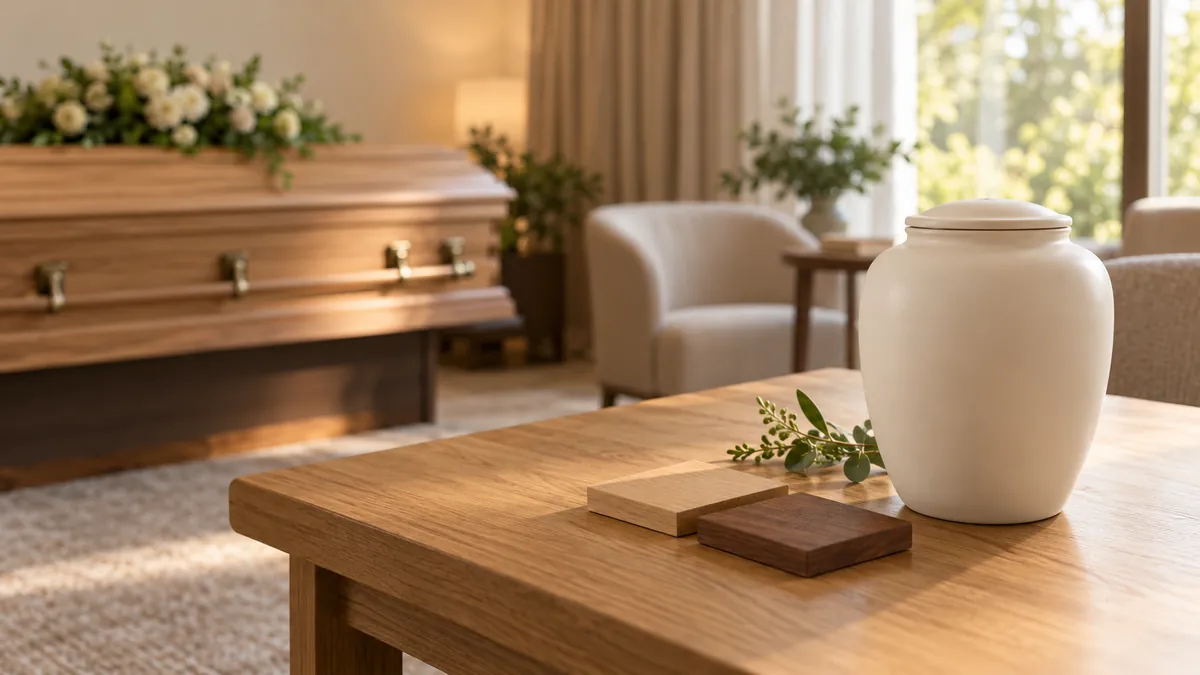
Choosing a casket or urn comes down to three questions: burial or cremation, how much you can comfortably spend, and what feels right for the person you lost. You do not need special knowledge to decide well. You just need a calm way to work through the choices in front of you.
If you are reading this in the middle of making funeral arrangements, take a breath first. This decision does not have to happen in the next five minutes, even if it feels that way in a funeral home office.
Do I choose a casket or an urn first?
This usually comes down to one earlier decision: burial or cremation.
- If the body will be buried, you need a casket, and possibly a burial vault if the cemetery requires one.
- If the body will be cremated, you need an urn, though a simple cremation container is also required for the cremation itself.
- Some families choose cremation followed by burial of the urn, which means you may need both a cremation container and an urn.
If this decision has not been made yet, it is worth settling before you look at any catalog. Everything else follows from it.
What are my actual casket options?
Caskets are sold in a wide range, and the differences are mostly about material, not dignity.
- Wood caskets - oak, pine, mahogany, cherry. Pine is typically the most affordable solid wood option.
- Metal caskets - steel (available in different gauges) or bronze and copper, which cost more.
- Cloth-covered or particle board caskets - among the least expensive, often used for cremation if a casket is used for the service beforehand.
- Rental caskets - a casket used for the viewing or service only, with a simple container used for the actual cremation afterward.
None of these materials affects how a service feels to the people attending. Most guests will not know, or think about, what the casket is made of.
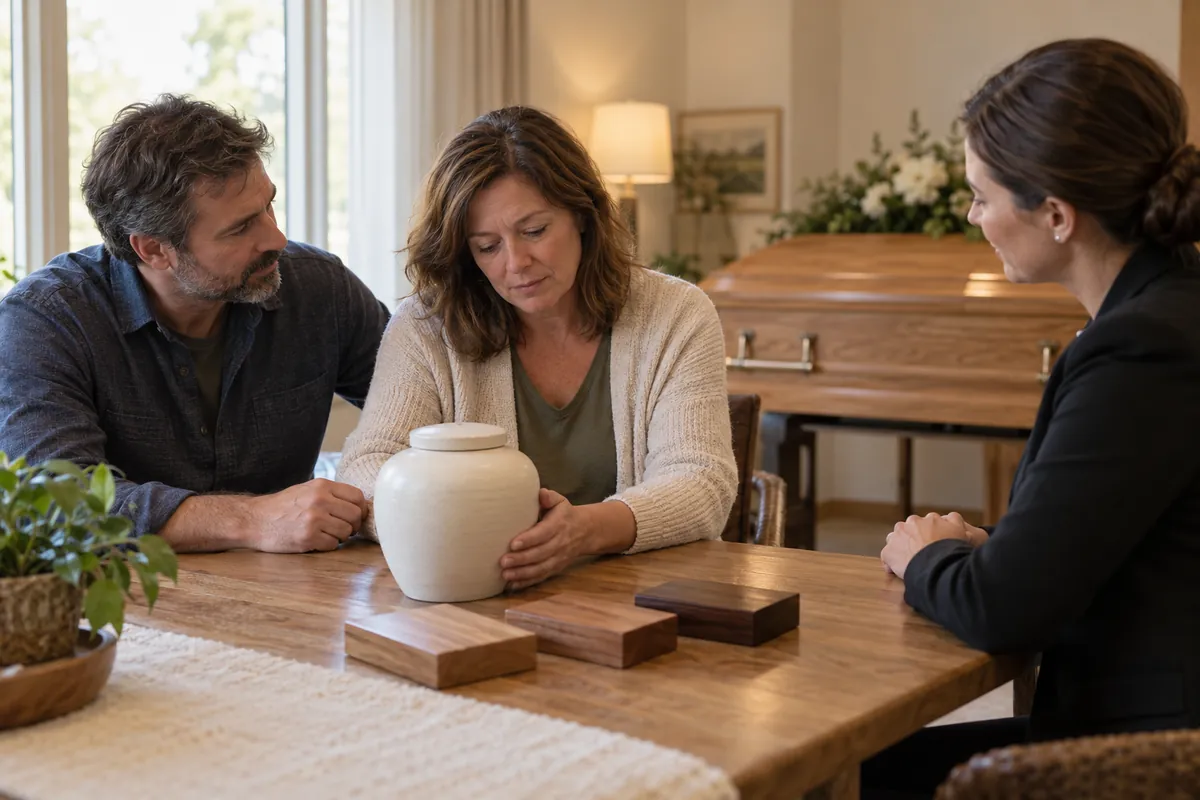
What are my actual urn options?
Urns have just as much range, and the "right" one depends on what you plan to do with the ashes.
- Permanent urns - metal, wood, or ceramic, meant for display or burial in a cemetery plot or columbarium niche.
- Biodegradable urns - made from materials like salt, paper, or sand, designed for scattering ceremonies or water burial.
- Keepsake urns - small urns that hold a portion of ashes, useful when several family members want to keep a share.
- Scattering tubes - simple, inexpensive tubes designed for one-time use at a scattering.
- Temporary containers - the plain container provided by the crematory, which many families use permanently without buying anything else.
If you are not sure yet what you want to do with the ashes long term, a temporary container buys you time. You can decide on a permanent urn later, without any pressure.
How do I decide without overspending?
Funeral homes are required by US law (the FTC Funeral Rule) to give you an itemized price list on request, and to let you buy a casket or urn elsewhere if you prefer. Knowing this changes the whole conversation.
A few practical ways to keep the decision grounded:
- Ask for the general price list before you look at anything. It is easier to judge options once you know the full range.
- Set a number in your head before you walk into the room. Say it out loud to whoever is with you, so you have a witness to your own plan.
- Ask directly what the least expensive option is. Lower-priced models are sometimes kept in a separate room or shown last. You are allowed to ask to see them first.
- Bring someone with you if you can. A second person, even by phone, makes it easier to pause before deciding.
- Remember you can buy online and have it shipped to the funeral home. This is legal, and funeral homes cannot refuse it or charge a handling fee for accepting it.
There is no rule that says more spending shows more love. A modest casket at a service full of warmth says everything that needs to be said.
What if the family disagrees on the choice?
This comes up more often than people expect, especially between siblings or a surviving spouse and adult children.
- Decide who has final say early, usually whoever is named next of kin or executor, and say it plainly so there is no ambiguity later.
- If budget is the sticking point, let one person quietly share the actual costs rather than debating preferences in the abstract.
- If sentiment is the sticking point, ask what the disagreement is really about. Often it is less about wood versus metal and more about who feels they are honoring the person correctly.
- When there is no clear agreement, default to what the person who died would have wanted, if that is known, or to simplicity, if it is not.
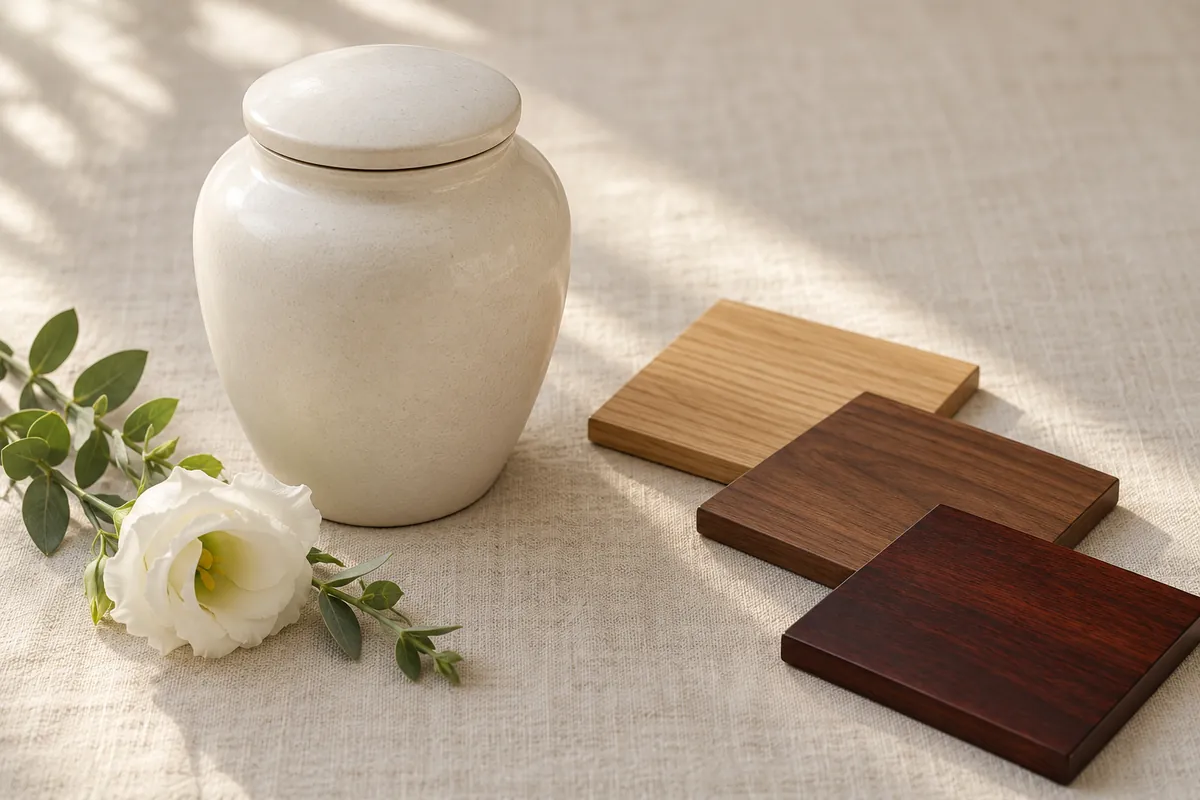
What else should I check before I sign anything?
A short checklist to bring with you, or to run through before approving a purchase:
- Does the cemetery require a burial vault or liner in addition to the casket.
- Does the price include delivery, or is that a separate charge.
- If buying online, how long shipping will take, and whether it will arrive before the service.
- Whether the urn needs to meet size or material requirements for a columbarium niche, if that is where it will go.
- Whether you want one urn, or a main urn plus keepsake urns for other family members.
Printing a short list like this and bringing it with you can make the whole meeting feel less like it is happening to you, and more like something you are steering.
A gentle last thought
You are allowed to take your time with this, ask plain questions, and choose simply if simply is what feels right. None of it changes how much the person was loved.
If you are still working through the practical side of planning, our step-by-step checklist for the first week and our guide to choosing funeral flowers cover some of the other decisions that tend to land all at once. And if you would like one place to keep track of choices like this alongside the rest of the service, the Funeral Planning Guide in our shop is built to hold it all in one calm, simple document.
Frequently asked questions
- Do I have to buy a casket from the funeral home?
- No. US law allows you to buy a casket or urn from any retailer, including online, and the funeral home must accept it without an added fee for doing so.
- Is it disrespectful to choose the cheapest casket or urn?
- No. Price has no bearing on love or respect, and a simple choice can still be dignified and completely appropriate.
- Can I use a cardboard or wood box for cremation instead of a casket?
- Yes. Most crematories accept a simple cremation container, which is usually far less expensive than a casket meant for burial.
- What size urn do I need?
- A general guide is one cubic inch of urn capacity per pound of body weight before cremation, though funeral homes can confirm the exact size for your situation.
- Can I split cremated remains into more than one urn?
- Yes. Many families divide ashes among keepsake urns, a main urn, and small scattering tubes, so there is no single right way to divide them.
- casket
- urn
- funeral planning
- funeral costs
- cremation
- burial
Related reading
- How to Ask for Time Off Work for a FuneralLearn how to ask for time off work for a funeral, including what to say to your boss, how much time to request, and sample bereavement leave wording.
- How to Word a Funeral Program for a Pet Loss ServiceSimple guidance on pet memorial service program wording, with copy-ready examples for cover pages, readings, and tributes.
- How to Plan a Funeral When You Live Far AwayA practical guide to planning a funeral from out of town, with steps for coordinating remotely, delegating locally, and staying organized.